
PFRDA will invite bids to appoint pension fund managers.

WhatsApp's advantage is that it is the first app millions of Indian check first thing in the morning and innumerable times during the day and night.
Digital payments and financial services firm Paytm is likely to allocate shares at the upper price band of Rs 2,150 apiece on November 16 after market regulator SEBI's approval which is expected to come on Monday, sources aware of the development said. Earlier the allocation was expected to take place on Monday and the Paytm Money app also displayed the same.

With the spectrum auction now delayed till at least next May, the expected 5G orders for telecom equipment have not been sealed, the companies point out. Surajeet Das Gupta reports.

It also assured that the amount of medical insurance coverage under the Ayushman Bharat scheme would be doubled from Rs 5 lakh to Rs 10 lakh.
The amount of money lying unclaimed with the Life Insurance Corporation of India dwarfs the budgets of many ministries. There was Rs 21,539.5 crore which lay unclaimed with India's largest insurance company, according to details in the initial public offer (IPO) document it filed over the weekend. The regulatory documentation is ahead of LIC selling shares to the public through the stock exchange for the first time this financial year. This will be India's largest ever public listing.
Financial planners also believe that retail investors should avoid the IPOs or direct stock route because it is too risky for them.

All FIPB records will now be digitised; old and unnecessary files will be weeded out

In an open letter to Zee's shareholders, Invesco, which holds a 7.74 per cent stake in the firm, reiterated its demand for an overhaul of the media group's board and that it would pursue extraordinary general meeting (EGM) to oust chief executive Punit Goenka and two other directors. Last month, Sony Group Corp's India unit signed a non-binding offer to buy Zee.
It is rare for Cabinet ministers to tick off state-owned companies publicly, yet that was what then petroleum and natural gas minister Dharmendra Pradhan did for ONGC. Speaking at an event on June 29, Pradhan said he has asked India's premier exploration company to find fresh oil acreages fast. "Do it yourself through some joint venture (or) through a new business model. But the government cannot permit you to hold resources for an indefinite time." The reason for this stricture is India's rising dependence on imported oil and gas. Or, to put it another way, falling domestic production (see chart: "Crude truth"), especially from ONGC, which faces a simple problem.

The Centre is unlikely to reduce its shareholding in Life Insurance Corporation of India (LIC) for at least 2 years following the insurer's listing because such a move could affect returns for investors participating in the mega initial public offering (IPO). The government's stance was communicated to prospective investors during roadshows after many of them sought clarity on the Centre's plan for lowering its shareholding in the insurer to meet the minimum public shareholding norms. To this, the Centre maintained its stand that it would not look at any equity dilution in the insurer for at least two years to avoid downward pressure on LIC's shares.

'Should we shortchange our investors by exiting early?'

The Bharatiya Janata Party regime will have to make good on this election slogan to restore state-owned banks to health, says Rajiv Lall.

With Bharatpe's co-founder Ashneer Grover launching an offensive against the firm's investors after facing a probe over alleged fraud, abrasive behaviour and corporate governance issues, the company on Friday said questioning the integrity of board members and misrepresentation of facts is painful. "The (company) board in all its actions has followed due process in the best interest of the company. We would urge that the confidentiality and integrity of the governance review and board meetings is maintained by all," BharatPe said in a statement. The statement followed Grover, who was sent on a three-month leave following allegations of using abusive language against Kotak Mahindra Bank staff and for fraudulent practices, reportedly saying he was "arm-twisted" by the company's investors into going on leave and that he had lost confidence in CEO Sameer Suhail.

Here's how you can get the best out of your mutual fund investment.

Blackstone on Monday said funds managed by the private equity firm will acquire a majority stake in IT firm Mphasis Ltd, triggering an open offer for acquisition of up to 26 per cent stake for about Rs 8,262 crore. A wholly-owned subsidiary of the Abu Dhabi Investment Authority (ADIA), UC Investments (Office of the Chief Investment Officer of The Regents, University of California) and others will co-invest along with Blackstone, a statement said. Based on the open offer subscription, the blended purchase price will vary between Rs 1,452 to Rs 1,497 per share (12-16 per cent premium to 12-month average price and 3-6 per cent discount to 6-month average price) and the purchase consideration will vary between Rs 15,200 crore to Rs 21,000 crore (approximately$2-2.8 billion), the statement said.

All these male politicians are unlikely to risk their sinecures to speak up in support of a bunch of women wrestlers who have chosen to challenge a politician who appears to have the ruling regime in a stranglehold, points out Kanika Datta.
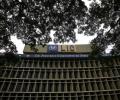
Sixteen merchant banks are in the fray to act as book running lead managers (BRLM) for the initial public offering of Life Insurance Corporation of India (LIC). These merchant banks will have to make a presentation before the Department of Investment and Public Asset Management (DIPAM) on August 24-25. The shortlisted banks are BNP Paribas, Citigroup Global Markets India, BofA Securities, Goldman Sachs (India) Securities, HSBC Securities and Capital Markets(India), J.P. Morgan India, Nomura Financial Advisory and Securities (India), Axis Capital, DAM Capital Advisors, HDFC Bank, ICICI Securities, IIFL Securities, JM Financial, Kotak Mahindra Capital, SBI Capital Market, and Yes Securities India.

Damage from new shenanigans can be contained if regulators move quickly when something does not smell right, counsels Debashis Basu.
Amid volatility in stock markets generated by tension between Russia and the US over Ukraine, LIC chairman M R Kumar on Monday said that the insurance behemoth was watching the geo-political situation carefully, though it was keen on listing of the IPO in March. The Life Insurance Corporation (LIC) has already filed the DRHP with the Securities and Exchange Board of India (SEBI) for its initial public offering (IPO). "We are watching the situation closely and carefully...but we are very keen on having listing in March," Kumar said, when asked about the impact of the evolving geopolitical situation on the upcoming IPO.

The majority have stayed away from getting into cash handling.

Manchester United said on Tuesday it was commencing a process to explore strategic alternatives, including a new investment or a potential sale, 17 years after the American Glazer family bought the English Premier League soccer club.
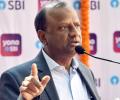
'At the first board meeting I chaired, I sensed that corporate governance is an issue in this company.' 'I started taking steps that may have aggrieved a few.' 'This has now become a mission I intend to accomplish before I step down.'

Industry players credit Sebi's first woman chairperson with putting special emphasis on cyber security, use of tech and data, areas where Sebi is trying to 'stay ahead of the curve'.
BharatPe co-founder and managing director Ashneer Grover, who was recently embroiled in a controversy over purportedly using abusive language against Kotak Mahindra Bank staff, has taken a voluntary leave till March-end. Grover informed the company's Board about his decision to proceed on leave earlier in the day, as per a statement issued by the fintech company on Wednesday. "For now, the Board has accepted Ashneer's decision which we agree is in the best interests of the company, our employees and investors, and the millions of merchants we support each day," it said. It added that the company will continue to be led by its CEO Suhail Sameer and its management team.

'If we want faster growth and want greater flow of credit towards the private sector, it's important to have many more of such large entities.'

Prime Minister Narendra Modi on Friday flagged off the Gandhinagar-Mumbai Vande Bharat Express semi-high speed train.

Richest Indian Gautam Adani's ports-to-power-to-cement conglomerate is "deeply overleveraged" with the group predominantly using debt to invest aggressively across existing as well as new businesses, CreditSights, a Fitch Group unit, said on Tuesday. In a report titled 'Adani Group: Deeply Overleveraged', CreditSights said, "In the worst-case scenario, overly ambitious debt-funded growth plans could eventually spiral into a massive debt trap, and possibly culminate into a distressed situation or default of one or more group companies." Starting out as a commodities trader in the late 1980s, the Adani group has diversified from mines, ports and power plants into airports, data centers and defence.

A Delhi court on Saturday took cognisance of the chargesheets filed by the Central Bureau of Investigation and the Enforcement Directorate against former Union minister P Chidambaram and his son Karti in the Aircel-Maxis case and summoned them on December 20.

A top Sri Lankan official, who claimed before a parliamentary panel that Prime Minister Narendra Modi allegedly influenced President Gotabaya Rajapaksa to award a wind power project to the Adani Group in this island nation, resigned on Monday, a day after retracting his earlier statement.
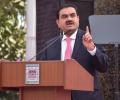
So far the government has been silent on the charges being levelled, even after the stock price rout. Perhaps it is hoping for the share price to settle so that the matter goes away, predicts Aakar Patel.

Expecting an annual CSR spending of Rs 15,000-20,000 crore (Rs 150-200 billion) by India Inc, Corporate Affairs Minister Sachin Pilot has asked companies to see the new law as an investment opportunity to create a better work environment, rather than a forced expenditure.
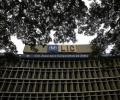
Sebi's change of rules will give the government -- which owns 100 per cent of LIC -- the flexibility to assess market demand and opt for lower dilution.
Experts explain the distinction between the rights of small and minority shareholders in public-listed and private companies.

This, Byju, was the time to apply the business lens, treat your company as a business, run your company as a business. Instead, you splurged, observes Suveen Sinha.

Bangladesh has sought revision of a 2017 power purchase agreement with Adani Power Ltd as the price for the coal-generated electricity appeared too expensive, officials said in Dhaka on Thursday. "We have communicated with the Indian company seeking revision of the agreement," an official of the state-run Bangladesh Power Development Board (BPDC) told PTI on the condition of anonymity and without elaborating on the matter. Media reports suggested that the "high coal price" to be purchased for the Adani plant at India's Jharkhand emerged as the key factor for the dispute.

Welcoming the passage of Lokpal Bill in the Rajya Sabha, India Inc said that once enacted it will help weed out corruption, boost investor confidence and expedite the decision making process.

'It was more than ego.' 'It carried with it a sincere belief that he was the quintessence of the country, that the country's destiny was irrevocably intertwined with his destiny.' An excerpt from T J S George's The Dismantling of India: In 35 Portraits.

Indian Economy poised for growth, say experts.
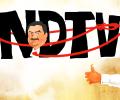
NDTV founders Prannoy Roy and his wife Radhika Roy on Friday said they will sell all but 5 per cent of their remaining shareholding in the news broadcaster to Adani Group for up to Rs 647.6 crore. Roys, who founded New Delhi Television Ltd (NDTV) as India's first and largest private producer of news current affairs and entertainment television, lost their status of being the company's largest shareholder in recent weeks. This follows Adani Group becoming the majority shareholding of NDTV after first buying out a company backed by the founders and then acquiring more shares from the open market.
